
Lenders have lined up a number of home loan products that can fit every aspirant's annual income.

The government had breached its fiscal deficit target given in the Budget for 2017-18 in November itself, touching 112 per cent of the limit.

Amid growing strain in India-Pakistan ties, the government is planning to fast-track four projects in Indus river basin to increase irrigation area in Jammu and Kashmir by nearly 2.05 lakh acres, weeks after India decided to "exploit to the maximum" the water of Pakistan-controlled rivers, including Jhelum, as per Indus Water Treaty.

'The Modi government must create conditions to integrate millions into the rural economy as many migrants are certainly not going to return to live an undignified life,' notes Ramesh Menon.

We should improve the business climate in Mumbai and Delhi, and India's ranking would immediately shoot up, says Bibek Debroy, a full member of NITI Aayog.

Here is the full text of the joint statement issued by India and the US.
That is bad news for officials taking part in discussions at the International Monetary Fund and World Bank meetings this week.
.jpg)
Because of corrections in property prices and oversupply in the office segment, the rich are investing in hospitals, warehouses, ATMs and other alternatives to traditional investment options.
Renewable energy is mistakenly restricted to electricity.

Hours ahead of his dinner with President Barack Obama, Prime Minister Narendra Modi cautioned the United States against hasty withdrawal of its troops from Afghanistan, citing the mistakes it has committed while pulling out from Iraq.
At its peak five years ago, it was a lifeline for 5.5 crore, or one in every three rural homes
Jaitley said a 10 per cent tax long on capital gains exceeding Rs 1 lakh made from the sale of shares has been introduced but those made till Janaury 31 would be grandfathered. A 10 per cent tax on distributed income by equity oriented mutual funds has also been proposed in the budget.
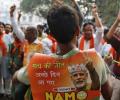
'Success will require political skill, not just economic expertise'

Raghuram Rajan, who has been pilloried by his critics for keeping interest rates high and has also been accused of stifling growth.

'We expect the new government to look into the issue of penalties imposed on technology firms involved in UID related projects.'

He endorsed transparency and financial stability in addition to issues related to inclusive growth and development, write Puran Singh and Nupur Pavan Bang.

'We do not want people who are air dropped and who fly out once the job is done.' 'Ever since liberalisation started, we keep on hearing that it's going to be jobless growth.' 'This speaks of the failure of the foreign returned policy makers.' 'When questions are raised, answers should be given and not a resignation.'

Harsh Roongta, Mahesh Padmanabhan, Anil Rego answer the most sought after questions on Budget Day.

"A solution has been put on the table. It is for Andhra Pradesh to decide whether they want the resources or they want to make an issue (out of it)," he said.
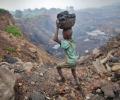
Political stability and a couple of big projects are pluses, but focus on medium and small industries is still missing.

'We have to make doing business in India easier.'

Blind spots of the company were two-fold - managing cash flow and investments to upgrade technology and continue research and development.

The temptation to rehash Manmohanomics is not going to deliver the achche-din that Narendra Modi has promised, warns Sriram Balasubramanian.
.jpg)
The year 2014 was one of the most challenging years for India. For two consecutive years our GDP growth was sub 5 per cent. Employment generation had declined, the revenue buoyancy was low and the country had become investment starved.

As Myanmar sets out on a new path after decades of military rule, India on Monday promised whole-hearted support to it in "every step" of its journey as the two countries resolved to deepen ties and actively cooperate to combat terrorism and insurgent activities in the region.

The industry's reactions to the Budget have been mixed.
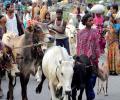
India is experiencing jobless growth and skepticism abounding that the country may not be able to cash in on its demographic bonus

Make in India has big shortcomings when it comes to natural resources.

'In the end, investing is about people.' 'If you get the right people, they make things happen,' Mengistu Alemayehu tells Shyamal Majumdar.

Banks on mobilising support from Dalit and Muslim voters. Sanjay Jog reports.

Prime Minister Narendra Modi, who recently completed one year in office, has, in an exclusive interview with Smita Prakash, editor, ANI, said the opposition alleging that his government is a "suit boot ki sarkar" is definitely better and more acceptable than being labelled a "suitcase" (ki sarkar), and satirically added, that after ruling for sixty years, the Congress has suddenly remembered the poor.

A survey by industry body Ficci has lowered the country's economic growth forecast for 2013-14 fiscal to 5 per cent, from 6 per cent projected in July, indicating tough times ahead.

As against an annual average growth of 10-11 per cent envisaged for the industry during the period, the actual annual average growth stood at 7.2 per cent during the plan period.

Indian Prime Minister Narendra Modi who envisioned Make In India last September was at his eloquent best as he made a fervent plea to global businesses to come Make In India.

ISB professor Krishnamurthy Subramanian tells Shobha Warrier/Rediff.com that Modi government's continuation of tax terrorism is driving away investors.
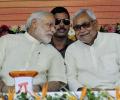
'Our priority will be to settle land disputes in Bihar, which I believe is the root cause of almost all crime in the state.'

'James Crabtree ignores the emergence of a nexus between business and politics going back to the 1920s and talks of it as a new child of 21st century India,' says Shivanand Kanavi.

The public-private partnership model is a compulsion, says the minister.

Younger party leaders are livid with the Murli Manohar Joshi-headed manifesto drafting committee for not taking their suggestions, reports Archis Mohan.

The markets stayed on edge last week due to the endless saga of Greece's problems.
 © 2026 Rediff.com - Advertise with us - Disclaimer - Privacy Policy - Sitemap - Feedback - About us - Terms of use - Grievances